Freelancer Net Worth Calculator
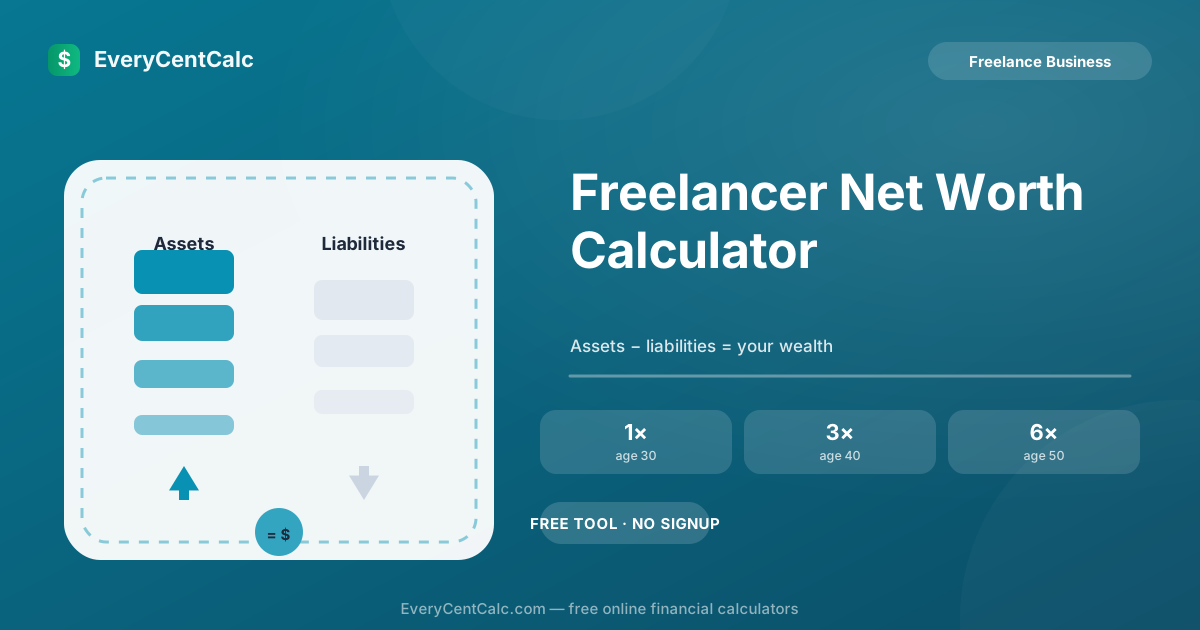
Track your financial health as a freelancer. This calculator shows your total net worth — assets minus liabilities — and helps you set targets for building wealth on your own terms.
Freelancer Net Worth Calculator
Track your total assets vs liabilities to know your true financial position
Assets
Liabilities
Good progress. Your net worth is 1.2x annual income. Target 3x by age 35 ($240,000.00) by increasing retirement contributions and paying down debt.
Guideline benchmarks (age × income ÷ 10): by 30 = 1x income, by 35 = 3x, by 40 = 5x, by 50 = 7x. Freelancers often lag early but catch up with tax advantages and business equity. Track quarterly to see your trajectory.
Advertisement
Smart Budget Planning for Your Business
Track every dollar of your business income and expenses with a dynamic Google Sheets budget planner. Automated insights, interactive dashboard, and full history tracking.
Affiliate link — we earn a commission at no cost to you. We only recommend products we trust.
Frequently Asked Questions
How do I calculate my net worth as a freelancer?+
Add up all assets (bank accounts, investments, retirement accounts, business equipment, home equity) and subtract all liabilities (credit cards, loans, business debt, taxes owed). The result is your net worth. Track it monthly to see your progress.
What should my net worth be as a freelancer?+
A rough guideline: by age 30, net worth = annual income × 1. By 40, 3x. By 50, 6x. By 60, 8x. But freelancers often start with lower net worth due to irregular early income. Focus on the trend — is it going up each quarter?
How is freelancer net worth different from employee net worth?+
Freelancers need larger emergency funds, may have irregular retirement contributions (no employer match), and often have business assets/liabilities. A freelancer earning $100k with $50k in the bank and no debt is in a very different position than one earning $100k with $200k in retirement accounts.
How do I calculate my net worth as a freelancer?
Add up all assets (bank accounts, investments, retirement accounts, business equipment, home equity) and subtract all liabilities (credit cards, loans, business debt, taxes owed). The result is your net worth. Track it monthly to see your progress.
Related Free Calculators
Freelancer Rate Calculator
Are you charging what you're worth? This calculator factors in your expenses, taxes, profit goals, and billable hours to tell you the minimum rate you should charge.
Freelancer Profitability Calculator
Revenue is vanity, profit is sanity. This calculator shows your actual take-home profit after expenses, taxes, and the costs you didn't know you had.
Freelancer Retirement Savings Calculator
No employer 401(k) match? No problem. This calculator shows you how much to save monthly to hit your retirement goal — and the best account types for freelancers.
Freelance Project Rate Calculator
Hourly rates leave money on the table. This calculator helps you set a profitable project rate based on your time estimate, complexity, revision rounds, and desired profit margin.
Freelancer Savings Rate Calculator
How much should you actually save? This calculator shows your ideal savings rate based on your income, expenses, tax obligations, and financial goals — including emergency fund timeline.
Freelance Hourly vs. Project Pricing Calculator
Should you charge hourly or per project? This calculator compares both approaches using your actual work patterns to show which earns you more money.